

Editorial & Print Storytelling
Designing cohesive editorial experiences through storytelling, publication systems, visual hierarchy, and reader-focused layout strategy.

01
Overview
Greenbelt Magazine is a community-focused lifestyle and culture publication centered around storytelling, local voices, visual journalism, and editorial design. As Managing Editor, my role extended beyond content oversight into the orchestration of reader experience, publication flow, visual consistency, and narrative structure across both print and digital environments.
My responsibilities included editorial planning, content organization, layout direction, publication management, visual storytelling strategy, and collaboration with writers, photographers, designers, advertisers, and production teams throughout the publishing cycle.
A major focus of the role involved balancing strong visual presentation with readability, pacing, and information clarity. Each issue required thoughtful organization of long-form content, editorial hierarchy, typography systems, and layout structures designed to guide readers naturally through the publication experience.
The work combined editorial leadership with UX-driven thinking by treating magazine layouts as reader journeys rather than static pages.
02
The Challenge
One of the primary challenges of editorial publishing was balancing large volumes of written content with readability and audience engagement. Long-form articles, feature stories, advertisements, photography spreads, and publication structure all needed to coexist within a cohesive and approachable reading experience.
Without strong hierarchy and pacing, readers can quickly experience cognitive overload, visual fatigue, or disengagement, especially within dense print environments.
The challenge was not simply creating visually appealing layouts, but designing editorial systems that guided readers naturally through stories while maintaining consistency, clarity, and emotional engagement.
Additional challenges included:
-
balancing visual storytelling with readability
-
organizing dense information clearly
-
maintaining cohesive layouts across issues
-
managing varied content types and article lengths
-
creating natural reader flow across spreads
-
preserving brand identity while allowing creative flexibility
-
adapting print storytelling for digital and social formats
The work required continuous refinement of layout systems, typography hierarchy, spacing, image placement, and narrative pacing to improve overall reader experience.
Strong editorial layouts rely heavily on structure, hierarchy, and reader orientation rather than decoration alone. Layout decisions directly affect how readers scan, interpret, and emotionally engage with content.


03
UX & Reader Experience Strategy
A major component of the publication process involved designing for reader behavior and usability.
The editorial system focused on:
-
visual hierarchy
-
scanning patterns
-
readability
-
pacing
-
information architecture
-
narrative sequencing
-
visual breathing room
-
cognitive clarity
Rather than treating each page independently, spreads were approached as connected storytelling systems designed to create continuity and guide readers naturally from one section to the next.
This approach aligns closely with modern UX principles where layout structure, hierarchy, and orientation directly influence comprehension, navigation, and engagement.
04
Information Architecture & Layout Systems
Editorial layouts were designed intentionally to support readability and reader flow.
Layout Priorities Included:
-
clear headline hierarchy
-
strategic image placement
-
balanced whitespace
-
readable line lengths
-
visual pacing
-
consistent section systems
-
modular layout structures
-
intuitive navigation through long-form content
Typography, spacing, scale, and photography placement were carefully used to direct attention and reduce overwhelm.
Research on publication design consistently shows that hierarchy, spacing, navigation structure, and readability directly affect engagement and comprehension across both print and digital reading environments.
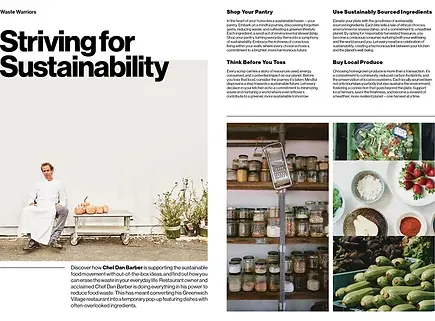

05
Typography & Readability
Typography systems were developed to support both aesthetics and functional readability.
Typography Goals:
-
maintain readability across long-form content
-
create clear content hierarchy
-
improve scanability
-
reduce reader fatigue
-
support editorial pacing
-
preserve publication consistency
Spacing, line length, contrast, and visual rhythm were treated as usability decisions rather than purely stylistic choices.
Readability research emphasizes that typography, spacing, and layout structure directly impact how easily readers process and retain information.
06
Print to Digital Crossover
As publication audiences increasingly consumed content digitally, editorial systems also needed to support multi-platform storytelling.
This included:
-
adapting layouts for digital sharing
-
social media promotion
-
mobile-friendly visual assets
-
digital publication flow
-
cross-platform brand consistency
-
audience engagement beyond print
The publication experience extended beyond physical pages into broader digital storytelling ecosystems.


07
Collaborations
-
The publication process required extensive coordination across multiple contributors and production timelines.
-
-
Collaboration Included:
-
writers
-
photographers
-
advertisers
-
designers
-
printers
-
editors
-
contributors
-
local businesses
-
production teams
-
-
-
Managing editorial production cycles required organization, communication, creative leadership, and deadline management across fast-moving publishing schedules.
08
Outcome & Impact
The editorial and design systems helped create a more cohesive, visually engaging, and reader-centered publication experience across multiple issues.
Through intentional hierarchy, stronger visual organization, and audience-focused storytelling, the publication achieved:
-
improved readability
-
more cohesive issue structure
-
stronger visual consistency
-
elevated editorial presentation
-
more engaging storytelling flow
-
clearer navigation through long-form content
-
stronger alignment between print and digital branding
The work helped position the magazine as both an editorial and visual storytelling platform rooted in thoughtful reader experience.
Editorial design is fundamentally an exercise in user experience design.
Strong publications do more than present information, they guide attention, shape emotional pacing, reduce cognitive friction, and create intuitive pathways through complex content systems.
